Follow us on :

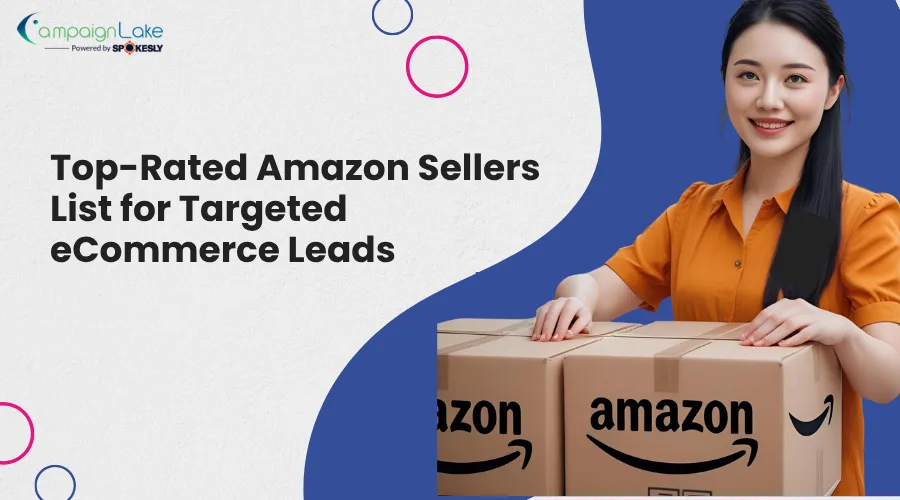
Quick answer: An Amazon sellers list is a B2B contact database of businesses that sell on Amazon, including third-party (3P) sellers who sell directly to shoppers and first-party (1P) vendors who sell wholesale to Amazon. Records pair business contact details with company name, product categories, location, and sales channel, so service providers can reach the owners and managers who run Amazon businesses.
This guide explains who Amazon sellers are, how 1P and 3P sellers differ, what seller information is publicly available, what an Amazon seller database should include, and how to reach sellers effectively.
Key takeaways
An Amazon sellers list is a segmented database of businesses that sell products through Amazon’s store. It typically includes owners and founders, ecommerce managers, and operations leaders at brands, resellers, and private label companies, along with business contact details, product categories, and location.
You will also see it called an Amazon sellers database, a list of Amazon sellers, or an Amazon seller email list. For sellers across multiple platforms, see our guide to e-commerce store owner lists. To build your own list from public sources, see how to build a targeted list of Amazon sellers.
According to Amazon’s 2025 Small Business Empowerment Report, independent sellers account for more than 60% of sales in Amazon’s store, and most of them are small and medium-sized businesses. The report says more than 75,000 independent sellers passed $1 million in sales in 2025, a 36% increase from 2024, and that U.S. independent sellers averaged more than $375,000 in annual sales.
For service providers, this means the seller market includes a large group of established businesses with real budgets for software, logistics, marketing, and financing, alongside many smaller sellers.
| 3P (third-party) sellers | 1P (first-party) vendors | |
|---|---|---|
| How they sell | Directly to shoppers through Seller Central | Wholesale to Amazon through Vendor Central, and Amazon resells |
| Who they are | Brands, resellers, private label businesses, many of them small | Usually established brands and manufacturers |
| What they buy | Listing tools, advertising services, inventory software, fulfillment, financing | Retail analytics, supply chain services, agency support, compliance |
| Key contacts | Owners, founders, ecommerce managers | Account, sales, and supply chain managers |
Many brands use both models. Ask providers whether their list separates 1P vendors from 3P sellers.
The U.S. INFORM Consumers Act requires online marketplaces to collect and verify information about high-volume third-party sellers, defined by the FTC as sellers with 200 or more sales and $5,000 or more in gross revenue in any 12-month period. For high-volume sellers with $20,000 or more in annual gross revenue on a marketplace, the marketplace must disclose certain seller information on product listings or in order confirmations.
That disclosure is meant to help shoppers identify sellers, not to supply marketing lists. A seller’s business name and address do not give you a decision maker’s email address, which is why B2B campaigns usually rely on a data provider that matches sellers to company and contact records.
| Field group | Typical fields | How it helps |
|---|---|---|
| Contact | Owner or manager name, business email, phone, LinkedIn profile URL | Reach the person who runs the Amazon business |
| Business | Company or brand name, website, storefront name | Match sellers to their brands and other channels |
| Channel | 3P seller, 1P vendor, other marketplaces used | Target the right selling model |
| Category | Primary product categories | Match offers to category needs |
| Size (where available) | Estimated revenue band, employee range | Focus on sellers that fit your price point |
| Location and quality | City, state, country, last verified date | Plan regional campaigns and re-verify records |
Revenue figures for sellers are usually estimates, because Amazon does not publish individual seller sales. Ask providers how size data is derived.
Amazon does not publish an official ranking of its top third-party sellers. Lists of “top Amazon sellers” come from third-party research tools that estimate sales from public signals such as listings, reviews, and seller feedback. Treat these rankings as estimates, and use them to identify categories and segments rather than exact sales figures.
Access CampaignLake's Technology Decision-Maker Database
Example segments:
CampaignLake is a B2B data provider that builds custom contact lists. Its Amazon sellers list includes separate lists of Amazon 3P sellers and Amazon 1P vendors, with related lists for eBay sellers and Shopify store owners.
Request a sample for your categories, check it against the sellers’ storefronts and websites, and compare it with other providers before you buy.
Ready to Reach More Decision-Makers?
Access verified business decision-maker data worldwide. Filter, download and build targeted outreach lists in minutes—without manual scraping or guesswork.
An Amazon sellers list is a B2B database of businesses that sell on Amazon, including 3P sellers and 1P vendors, with business contacts, brand names, product categories, and locations. Service providers use it to reach the people who run Amazon businesses.
3P sellers sell directly to shoppers through Seller Central. 1P vendors sell wholesale to Amazon through Vendor Central, and Amazon resells their products. Many established brands use both models.
Amazon’s 2025 Small Business Empowerment Report says more than 75,000 independent sellers passed $1 million in sales in 2025, a 36% increase from 2024.
No. Amazon does not publish an official ranking of top third-party sellers. Rankings come from third-party tools that estimate sales from public signals, so treat them as estimates.
Under the INFORM Consumers Act, marketplaces must disclose certain information about high-volume sellers with $20,000 or more in annual gross revenue on product listings or order confirmations. That information identifies the business but usually not a decision maker’s email address.
Yes. Most providers offer category filters, such as beauty, home, electronics, or supplements, which you can combine with location and business size.
In the United States, CAN-SPAM allows B2B commercial email without prior consent if you follow its rules, including honest headers, a postal address, and a working opt-out. Do not use Amazon’s buyer-seller messaging for marketing. This is general information, not legal advice.
Revenue data for Amazon sellers is usually estimated, because Amazon does not publish individual seller sales. Use it as a guide for segmentation rather than an exact figure.

David Jax is a seasoned B2B marketing strategist specializing in targeted email lists and data-driven outreach solutions. With years of experience in lead generation and sales enablement, David helps businesses connect with the right audiences through precision-based marketing tactics. His ability to translate complex data into clear, actionable strategies has made him a trusted voice in the B2B space. Outside of his writing, David is passionate about exploring emerging trends in marketing technology and refining techniques that maximize campaign performance. He regularly contributes to leading industry blogs and enjoys sharing insights that help marketers turn data into growth.