ISO 27001 certified & SOC 2 Type II attested · Works to comply with GDPR, CCPA & CASL
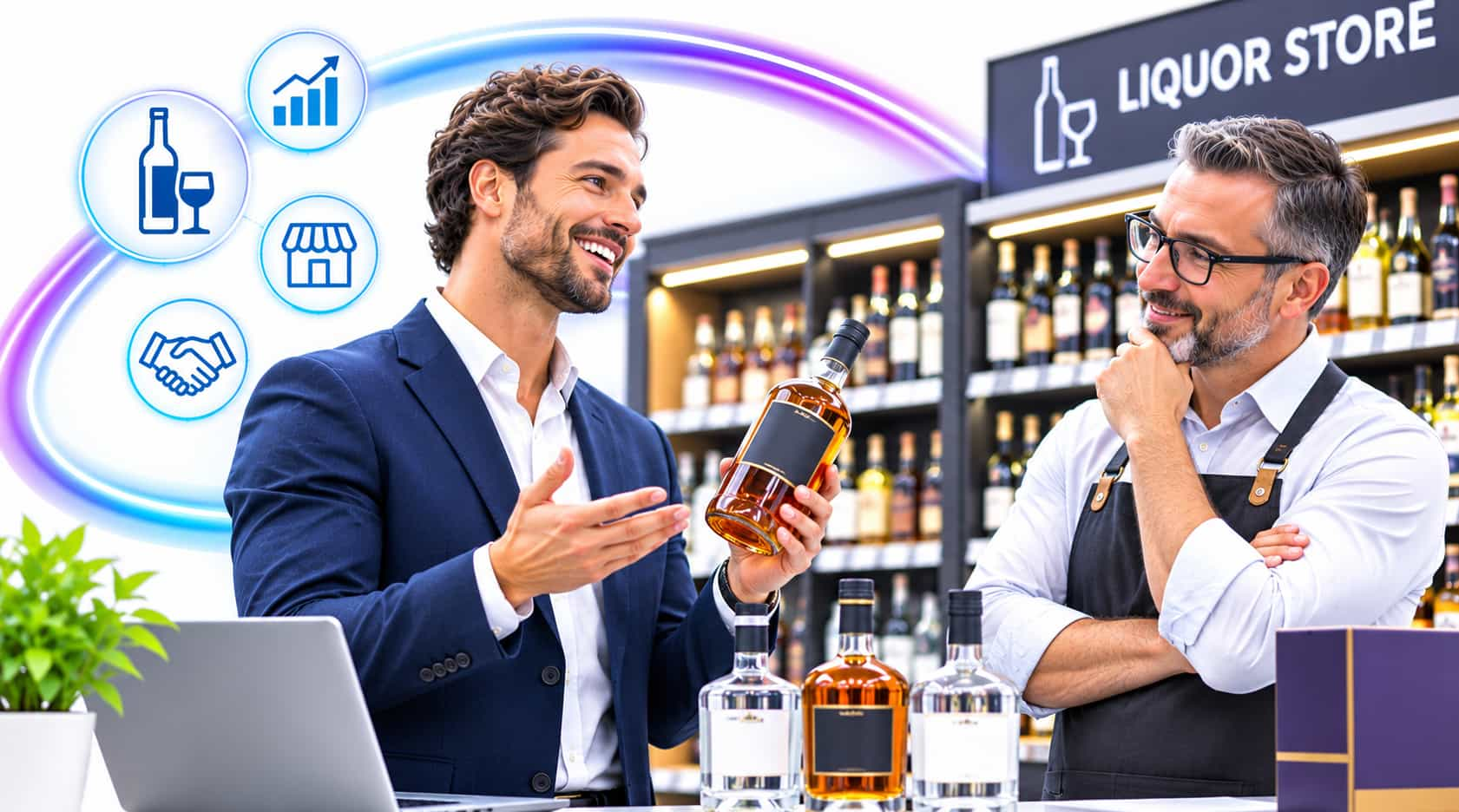
Quick answer: In most US states, a spirits brand cannot sell directly to liquor stores. Under the three-tier system, the producer or importer sells to a licensed distributor (wholesaler), and the distributor sells to licensed retailers. To get on shelves you need federal approvals, state brand registration, a distributor in each state and a retailer pull strategy: store buyers who want your product make distributors pay attention. Control states add a fourth step, because the state itself buys and sometimes sells spirits.
Craft distillers and new spirits brands often discover that making a great product is the easy part. Getting it onto liquor store shelves means working through a system designed after Prohibition to separate producers, wholesalers and retailers.
This guide explains how the three-tier system works, what store buyers look for and how brands build retail demand state by state, including in large license states such as Florida, Georgia and New York.
| Tier | Who | Role |
|---|---|---|
| 1. Supplier | Distillers, importers, brand owners | Produce or import the product, register brands, set pricing and marketing |
| 2. Distributor | Licensed wholesalers | Buy from suppliers, warehouse, sell and deliver to retailers, collect payment |
| 3. Retailer | Liquor stores, grocery and convenience stores, bars and restaurants | Sell to consumers |
Each state writes its own alcohol laws, so details such as franchise protections, self-distribution allowances and price posting rules vary. Some states let small producers self-distribute within limits; many do not for spirits. Always check the state alcohol regulator’s rules before you plan a launch.
In license (open) states, private distributors and retailers handle spirits. Florida, Georgia and New York are license states, which is why brands targeting them focus on winning a distributor and independent store buyers.
In control states, a state agency acts as the wholesaler for spirits and, in some states, operates the retail stores too. Roughly 17 states run some form of control system, tracked by the National Alcohol Beverage Control Association (NABCA). In these markets you apply for a product listing with the state board, and store-level demand still matters because listings are reviewed on sales performance.
Access CampaignLake's Industry-Specific Email Database
Distributors carry thousands of products and earn money on volume. A new brand gets attention when it brings demand they can see:
That last point is why many brands contact store buyers early. A distributor is far more likely to take on a brand that independent liquor stores are already asking for.
Chains and franchise groups often buy centrally, while independent stores usually decide store by store, frequently through the owner or a spirits buyer. Knowing which applies saves wasted visits.
CampaignLake’s liquor store email list includes owners, managers and buyers and can be filtered by state, including Florida, Georgia and New York. For producers selling through restaurants and wine shops, see the wine industry email list and restaurant contacts.
In most states, no. The three-tier system requires spirits to move from the supplier to a licensed distributor and then to the retailer. A few states allow limited self-distribution for small producers, so check the rules in each state.
It is the US framework that separates alcohol producers and importers, distributors (wholesalers) and retailers. Each tier is licensed separately, and each state sets its own rules within that structure.
Control states are those where a state agency acts as the wholesaler for spirits and in some cases runs retail stores. Brands apply for listings with the state board. NABCA tracks which jurisdictions operate control systems.
No. They are license states, where private distributors and retailers sell spirits. Brands need a distributor and support from retailers in each of those states.
Show demand: sales data, a focused territory plan, a marketing budget, your own brand ambassadors and interest from retailers who want to stock the product.
At independent stores it is usually the owner, general manager or a dedicated spirits buyer. Chains and franchise groups often buy centrally, so contact their category or purchasing team.
Getting a spirits brand into liquor stores means respecting the three-tier system: secure federal and state approvals, win a distributor, and create real demand among store buyers. Start in a focused territory, support every account and use retailer interest to strengthen your distributor relationships.
Planning a retail push? Explore CampaignLake’s liquor store contacts and request a free sample for your target states.
Primary sources
Related CampaignLake guides
Ready to Reach More Decision-Makers?
Access verified business decision-maker data worldwide. Filter, download and build targeted outreach lists in minutes—without manual scraping or guesswork.

Tanoj Kumar writes the CampaignLake blog's guides on B2B data, industry and professional email lists, and B2B lead generation.