Follow us on :

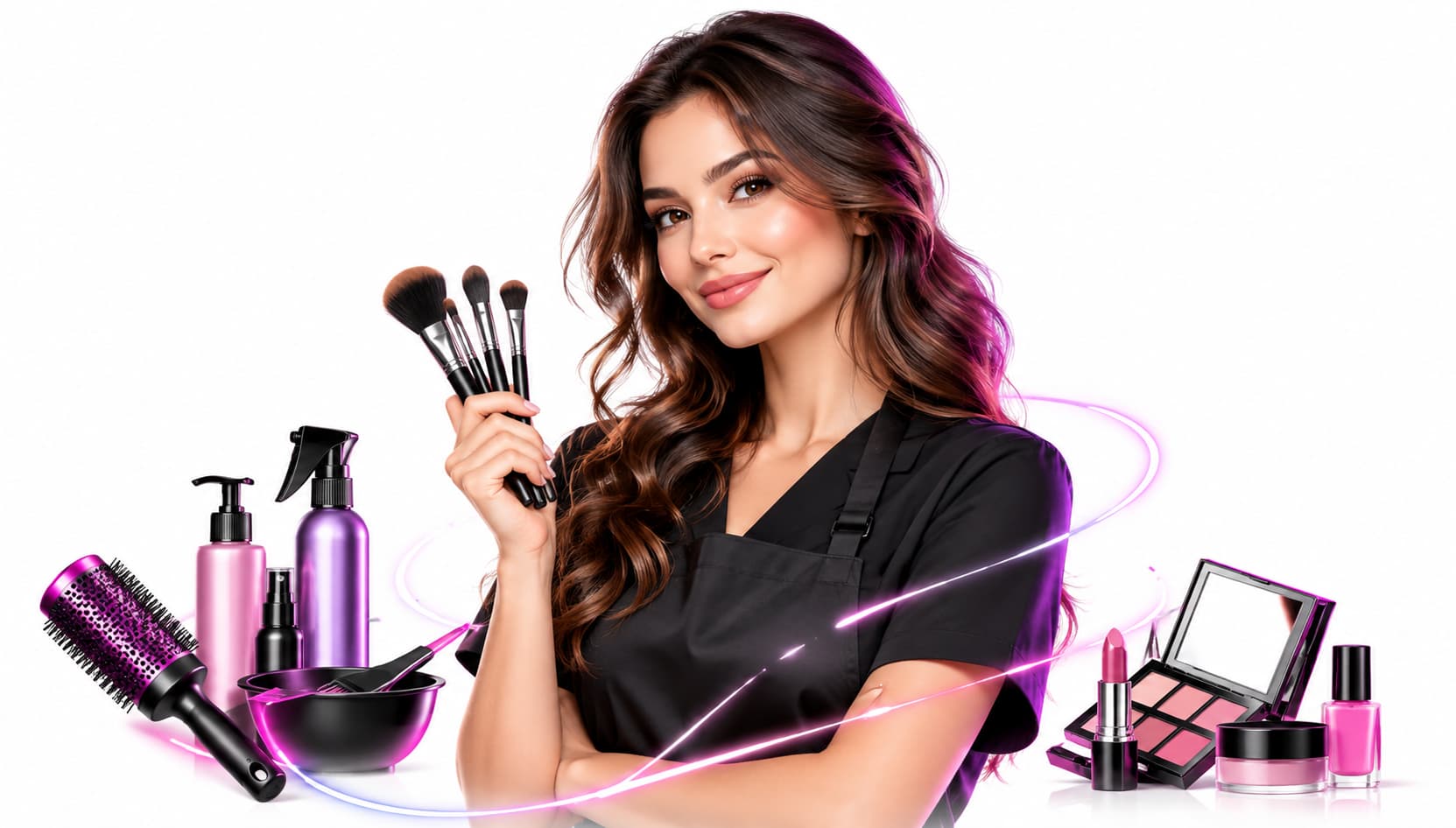
The beauty industry offers significant opportunities for brands, suppliers, software providers, educators, and B2B marketers looking to connect with professional cosmetologists. However, reaching the right professionals requires more than collecting email addresses. Businesses need relevant contacts, accurate professional information, precise audience segmentation, and a clear outreach strategy.
A cosmetologists email list helps businesses identify and reach beauty professionals based on criteria such as job title, specialty, salon affiliation, and geographic location. When appropriately sourced, maintained, and segmented, this data can support targeted prospecting, professional product marketing, salon technology sales, and business development campaigns.
For companies selling to beauty professionals, the objective is straightforward: connect the right offer with the right audience instead of spending time and marketing resources on irrelevant contacts.
This guide explains what a cosmetologists email list includes, who should use one, how to evaluate data quality, which segmentation options matter, and how businesses can use targeted contact data to build more effective B2B campaigns.
A cosmetologists email list is a database of contact information for cosmetologists and other relevant beauty professionals, organized to help businesses identify and reach suitable prospects for professional products, services, education, and business solutions.
Depending on the provider and the selected audience, the database may include professional names, business email addresses, job titles, salon or employer details, geographic information, and available licensing information.
Businesses use these records to identify potential customers, personalize outreach, develop sales pipelines, and connect with professionals whose work aligns with their offerings.
A well-targeted cosmetologists email database should help answer three essential questions:
Who should you contact? Identify relevant professionals, business owners, managers, and other potential decision-makers.
Where do they work? Understand their salon affiliation, business type, and geographic market.
Why might they be relevant? Match their professional role and services with your product or service offering.
The value of a database depends on how well it answers these questions—not simply on the number of records it contains.
A cosmetologists email list is valuable for businesses that sell products, services, software, or educational programs to beauty professionals. From professional beauty brands and salon equipment suppliers to software companies and cosmetology schools, a targeted contact database helps businesses connect with relevant professionals, identify potential buyers, and develop focused B2B marketing campaigns.
The most effective approach is to target cosmetologists, salon owners, managers, and other professionals according to their roles, purchasing influence, and business needs.
Haircare, skincare, and cosmetics manufacturers can use a targeted cosmetologists email list to introduce professional product lines, share product information, and connect with beauty professionals who may influence product selection or purchasing decisions. Relevant outreach can also support product demonstrations and professional brand partnerships.
Beauty distributors and wholesalers can target salon owners, managers, and independent beauty professionals who may purchase professional products in bulk. Segmenting contacts by location, business type, and professional role helps distributors identify potential wholesale customers and develop regional sales opportunities.
Businesses selling styling chairs, salon stations, hairdryers, professional styling tools, and other salon equipment can use targeted contact data to identify salon owners and studio operators. These decision-makers may be relevant prospects when opening a new salon, upgrading equipment, or expanding an existing business.
Companies offering appointment-booking systems, salon management software, payment solutions, inventory tools, and customer relationship management platforms can use a cosmetologists email list to identify relevant salon businesses. For operational software, salon owners and managers are often more appropriate targets than individual practitioners without purchasing authority.
Cosmetology schools and professional training institutions can use relevant contact databases to connect with beauty professionals who may be interested in continuing education, advanced techniques, workshops, or professional development. Campaigns should focus on programs that match the recipients’ qualifications, interests, and eligibility.
Marketing agencies serving salons, spas, and independent beauty professionals can use segmented contact data to identify potential clients for relevant services, including website development, local SEO, branding, reputation management, and digital advertising. Targeting by business type and location can help agencies prioritize prospects that fit their service offerings.
Organizations offering advanced beauty training, workshops, and relevant certification programs can reach suitable professionals through targeted outreach. Segmenting by specialty, professional role, and geographic market helps providers promote educational opportunities to audiences for whom the training is relevant.
Choosing the right audience matters: Before selecting a cosmetologists email list, define your ideal customer profile, identify the professional roles most likely to influence a purchase, and select contact fields that support your campaign objectives. This helps businesses focus on relevant prospects instead of relying on database size alone.
Access CampaignLake's HealthCare Decision-Maker Database
The information available varies by provider, source, geography, and order specifications. Before purchasing a database, confirm which fields are actually supplied and how they are validated.
| Data category | Potential fields | Why it matters |
|---|---|---|
| Professional identity | First name, last name, professional name | Supports relevant, personalized communication |
| Contact information | Business email address, business phone when available | Provides channels for appropriate B2B outreach |
| Professional details | Job title, specialty, professional role | Helps distinguish practitioners from business decision-makers |
| Licensing information | License number, licensing jurisdiction, status where available | Helps evaluate professional eligibility and relevance |
| Business information | Salon name, employer, business website | Helps identify the workplace and assess business fit |
| Geographic details | Country, state, city, ZIP code | Supports territory-based prospecting |
| Business classification | Salon, studio, spa, or educational institution where verified | Helps segment contacts by business model |
| Additional identifiers | Professional profile or company profile links when available | Supports research and contact validation |
A list containing only names and email addresses may be sufficient for a basic campaign, but it provides limited context for deciding whom to contact and what to offer.
Professional and business fields can help a marketing team create more relevant segments. Geographic data can support territory planning, while job titles and business affiliations can help distinguish individual practitioners from salon owners.
Licensing information can be useful when relevant, but buyers should confirm the source, date, jurisdiction, and meaning of any licensing status provided. An email verification result does not establish that a professional license is active.
A targeted cosmetologists email list can support B2B marketing when the contacts match the intended audience and the outreach is relevant.
Instead of marketing to a broad consumer audience, businesses can focus on professionals whose work relates to their products or services.
A distributor selling professional salon equipment, for example, can prioritize salon owners and operators instead of sending the same offer to every beauty professional.
Segmentation helps businesses create separate campaigns for different professional roles, specialties, locations, and business types.
A skincare supplier might prioritize professionals offering relevant skin treatments, while a salon management software company may focus on owners and managers.
More precise segmentation makes it easier to tailor messaging to the audience’s actual business needs.
Contact data can support prospect research, outreach, qualification, and follow-up. When combined with a relevant offer and a well-defined ideal customer profile, it can help sales teams identify potential business opportunities.
However, a contact record is not automatically a qualified lead. Qualification requires additional evidence of fit, need, interest, or purchasing authority.
Beauty professionals and salon operators may be relevant prospects for distribution agreements, product demonstrations, professional partnerships, and educational initiatives.
A properly segmented list can help businesses identify suitable contacts for these activities.
Geographic and business filters can help teams divide prospects by territory, assign accounts, and coordinate outreach.
This can be particularly useful for regional distributors, salon equipment suppliers, and businesses expanding into new markets.
Effective segmentation begins with the campaign objective. Rather than requesting every available record, define the professional audience most likely to benefit from your offer.
Relevant specialty categories may include:
Professional titles and licensing categories differ across jurisdictions. Not every beauty specialty falls under the same license, so verify the definitions used by your data provider.
Consider whether your offer is intended for:
For business purchases, role relevance is particularly important. A person who uses a product may influence the buying process without controlling the budget.
Depending on the available data, businesses may prioritize:
These categories can help businesses distinguish individual practitioners from organizations with purchasing responsibilities.
Geographic targeting may include country, state, city, ZIP code, or sales territory.
For example, a regional beauty equipment distributor may prioritize salon owners in the areas its sales representatives serve. A company launching a new product across multiple states may develop separate campaigns for each market.
The practical rule: Apply only the filters that improve the relevance of your offer. More filters are not automatically better if they exclude suitable prospects or rely on inaccurate classifications.
The strongest campaigns connect a defined audience with a specific business problem and a relevant next step.
| Use case | Target audience | Example offer | Possible CTA |
|---|---|---|---|
| Professional haircare marketing | Relevant stylists and salon professionals | Product education or a professional product demonstration | Explore the professional range |
| Salon equipment sales | Salon owners and operators | Equipment catalogue or consultation | Request product details |
| Salon software lead generation | Salon owners and managers | Booking or inventory management demonstration | Book a demo |
| Beauty education | Relevant professionals seeking further training | Course or workshop information | View available programs |
| Wholesale distribution | Suitable salon businesses | Wholesale terms and product catalogue | Discuss distribution |
| Professional partnerships | Relevant beauty businesses and educators | Partnership proposal | Explore a partnership |
Suppose a haircare manufacturer is introducing a new professional product range.
A broad, untargeted campaign could reach businesses and individuals who have little interest in the products. A more focused campaign could prioritize relevant salon professionals in selected markets.
The brand could then create messaging around product education, professional usage, product availability, or a demonstration.
The campaign should be evaluated using meaningful business metrics, such as qualified replies, demonstrations booked, opportunities created, and eventual sales—not merely the number of emails sent.
A company selling salon appointment-booking software should focus on businesses and professionals who can evaluate or influence software purchases.
Salon owners and managers may be more appropriate than individual practitioners who do not manage business operations.
A tailored message might explain how the software supports appointment scheduling, customer management, or administrative workflows. The offer should focus on a relevant business benefit rather than a generic software pitch.
These examples illustrate why audience fit and message relevance matter as much as contact volume.
Data quality should be evaluated before a campaign begins. A database may contain valid email addresses but still be unsuitable for a particular business because its records are outdated, poorly classified, duplicated, or unrelated to the intended audience.
Use the following checklist when evaluating a provider.
| Quality check | What to ask the provider |
|---|---|
| Email validation | What verification methods are used, and when were the records last checked? |
| Professional relevance | How are cosmetologists distinguished from other beauty professionals? |
| Business accuracy | Are employer, salon, and business details checked against reliable sources? |
| Licensing data | Is licensing information included, and what sources and dates support it? |
| Duplicate handling | How are duplicate records identified and removed? |
| Data freshness | How frequently is the database reviewed or refreshed? |
| Sample availability | Can you inspect representative records before purchasing? |
| Field transparency | Which contact, professional, and business fields are included in the final delivery? |
| Suppression handling | Can known opt-outs and excluded contacts be removed from the campaign audience? |
| Data provenance | Can the provider explain how the information was collected and what usage rights or restrictions apply? |
Three concepts should be evaluated separately.
Email verification assesses whether an address appears deliverable based on the checks performed. It cannot guarantee future inbox placement or that a message will reach the intended person.
Professional verification evaluates whether the record corresponds to the claimed person, role, business, or license, depending on the checks performed.
Marketing permission and legal compliance concern whether the contact information can lawfully be used for the intended campaign under applicable rules. Neither an active license nor a valid email address automatically establishes permission to send marketing messages.
These distinctions are important when comparing providers. Ask for the actual verification process and evidence rather than relying exclusively on headline claims such as “100% verified.”
CampaignLake provides B2B contact data for businesses seeking more targeted prospecting and marketing audiences. For a cosmetologists email list, the priority should be defining the right professional segment and evaluating whether the available records match the campaign’s requirements.
Before selecting a dataset, identify:
CampaignLake’s human and AI verification approach is intended to support contact-data quality. Buyers should confirm the checks applied to the specific dataset, the available fields, and the recency of verification.
A sample review is a practical way to assess whether the data matches your ideal customer profile. Check a representative set of records for relevant roles, usable contact fields, business fit, duplicates, and the quality of segmentation.
The objective is not simply to obtain a large contact file. It is to select a dataset that supports your specific business development goals.
Want to evaluate a suitable audience for your campaign? Contact CampaignLake to discuss your targeting requirements and request a sample, where available.
A generic business email database may cover many industries and job functions. A targeted cosmetologists email list is intended to narrow the audience to relevant beauty professionals.
| Evaluation criterion | Generic business database | Targeted cosmetologists email list |
|---|---|---|
| Audience focus | Multiple industries and job functions | Cosmetologists and selected related professional segments |
| Professional relevance | Requires additional filtering | Can be organized around beauty-professional criteria |
| Specialty targeting | Depends on available fields | May support relevant beauty specialties when recorded |
| Salon-specific targeting | Depends on business classification | May support salon and workplace filters when available |
| Geographic selection | Depends on the dataset | Can support location-based selection when fields are available |
| Data verification | Varies by provider | Must be assessed using the provider’s actual process |
| Best fit | Broad prospecting across industries | Campaigns specifically targeting beauty professionals |
A specialized database is not automatically more accurate than a generic one. Its advantage is the potential to reduce irrelevant records and simplify audience selection when its fields and classifications match your campaign.
Compare actual samples, verification methods, and coverage before making a decision.
Determine which professionals or businesses are most relevant to your offering. Consider job role, specialty, business type, location, and purchasing responsibilities.
Avoid sending identical messaging to every contact. A salon owner may care about business efficiency and profitability, while a working stylist may be more interested in professional products, techniques, and education.
Use relevant professional and business context to explain why your offer may be useful. Avoid making unsupported assumptions about a person’s needs or using personal information in ways that recipients would not reasonably expect.
Review the quality of the records, remove duplicates, check suppression lists, and monitor delivery issues. Email validation should be part of a broader data-quality process.
Track relevant metrics, including qualified responses, meetings booked, opportunities created, conversions, and unsubscribe rates.
Open rates alone are not a reliable measure of campaign success because privacy protections and email-client behavior can affect them.
For US commercial email, the Federal Trade Commission’s CAN-SPAM Act compliance guide explains requirements concerning truthful sender information, non-deceptive subject lines, identification, physical postal addresses, and opt-out mechanisms.
CAN-SPAM applies to commercial email, including business-to-business messages. Businesses must honor opt-out requests and remain responsible for compliance even when another company handles email marketing on their behalf.
For campaigns involving other countries, assess the applicable privacy and electronic marketing rules before sending. Do not assume that buying a contact list establishes consent or makes a campaign compliant.
A large database is not necessarily the best fit if it contains irrelevant professionals or insufficient segmentation.
Related occupations may have different roles, qualifications, and licensing requirements. Confirm the provider’s classifications.
Individual practitioners, salon managers, and salon owners have different responsibilities. Select roles according to the purchase you are trying to influence.
Ask how email addresses, professional identities, and business details are checked and when the records were last reviewed.
Review representative records before committing to a complete dataset. A sample can expose missing fields, poor segmentation, or records that do not match your target audience.
Generic outreach makes it harder to demonstrate relevance. Segment the audience and tailor the offer.
Check applicable legal requirements, use appropriate suppression procedures, and honor opt-outs.
Avoiding these mistakes helps businesses evaluate contact data more realistically and build campaigns around relevance, quality, and measurable outcomes.
A cosmetologists email list is a database of contact information for cosmetologists and selected beauty professionals. Depending on the provider, it may include business email addresses, professional roles, specialties, salon details, locations, and other business fields. Companies use these records for targeted prospecting, professional product marketing, education, and relevant B2B business development.
You can evaluate B2B contact-data providers that offer cosmetologist-specific audiences, custom segmentation, sample records, and transparent verification methods. Compare the actual data fields, source information, freshness, and quality-control process before purchasing. Requesting a representative sample helps establish whether the database matches your intended audience.
Available fields may include professional name, business email, job title, specialty, salon or employer name, business website, geographic location, and licensing information where available. The exact fields vary by provider and dataset. Always confirm which fields are included, how they are validated, and whether the data supports your intended use.
Many B2B data providers offer geographic and professional segmentation, although available filters differ. Depending on the dataset, you may be able to select professionals by state, city, specialty, job role, or salon affiliation. Confirm the available filters before ordering and avoid assuming that every record contains every field.
Review the provider’s email-validation methods, verification timestamps, business-source checks, duplicate-removal process, and data-refresh practices. Inspect sample records to assess relevance and completeness. Remember that email verification, professional licensing verification, and marketing permission are separate matters and should be evaluated independently.
Professional beauty brands, salon equipment distributors, beauty product suppliers, salon software providers, and relevant training organizations may benefit from targeted access to beauty professionals. The strongest fit depends on whether the product is intended for working practitioners, salon owners, managers, educators, or other relevant decision-makers.
A cosmetologist email list may include working practitioners and other beauty professionals, whereas a salon owner email list focuses on individuals who own salon businesses. Some people may belong to both audiences. Businesses should choose based on whether their offer is intended for product users, purchasing decision-makers, or both.
Yes. It can support prospect identification, targeted outreach, and sales pipeline development when the contacts match the intended audience. However, a contact record is not automatically a qualified lead. Businesses still need relevant messaging, appropriate qualification, follow-up, and measurable campaign objectives.
There is no single refresh interval suitable for every database. Email addresses, employment, business ownership, and professional status can change over time. Ask providers when records were last checked, which fields are refreshed, and how invalid or outdated records are handled. Revalidate records before important campaigns when appropriate.
Legality depends on the applicable jurisdiction, the source and intended use of the data, and the marketing channel. In the United States, CAN-SPAM establishes requirements for commercial email, including business-to-business messages. Other jurisdictions may impose additional consent or privacy requirements. Review applicable laws and obtain qualified legal guidance when necessary.
Compare audience relevance, available data fields, verification methods, data freshness, geographic coverage, sample availability, pricing transparency, and the provider’s explanation of data sourcing and permitted use. Also check how duplicates, invalid records, exclusions, and opt-out requirements are handled.
Start with a clearly defined target audience and a relevant offer. Segment contacts by professional role, specialty, business type, and location where supported. Personalize messages, validate data, follow applicable email marketing rules, and measure qualified replies, meetings, opportunities, and conversions rather than relying only on sending volume.
Successful B2B prospecting starts with audience relevance. For businesses serving cosmetologists and the wider professional beauty market, targeted contact data can help organize outreach, identify potential buyers, and support more focused sales and marketing campaigns.
Before choosing a cosmetologists email list, define the professionals you need to reach, identify the contact fields required for your campaign, and evaluate the dataset’s quality and suitability.
CampaignLake can help you explore targeted B2B contact data for your prospecting requirements.
Request a sample to review the available fields and determine whether the audience fits your ideal customer profile before proceeding.
Ready to build a more targeted beauty-professional outreach campaign? Contact CampaignLake to discuss your cosmetologists email list requirements.
Ready to Reach More Decision-Makers?
Access verified business decision-maker data worldwide. Filter, download and build targeted outreach lists in minutes—without manual scraping or guesswork.

Tanoj Kumar writes the CampaignLake blog's guides on B2B data, industry and professional email lists, and B2B lead generation.