



Companies Using Shopify: Well-Known Brands and How to Find Shopify Stores

Home Infographics Companies Using Shopify: Well-Known Brands and How to Find Shopify Stores
Companies Using Shopify
Table of Contents

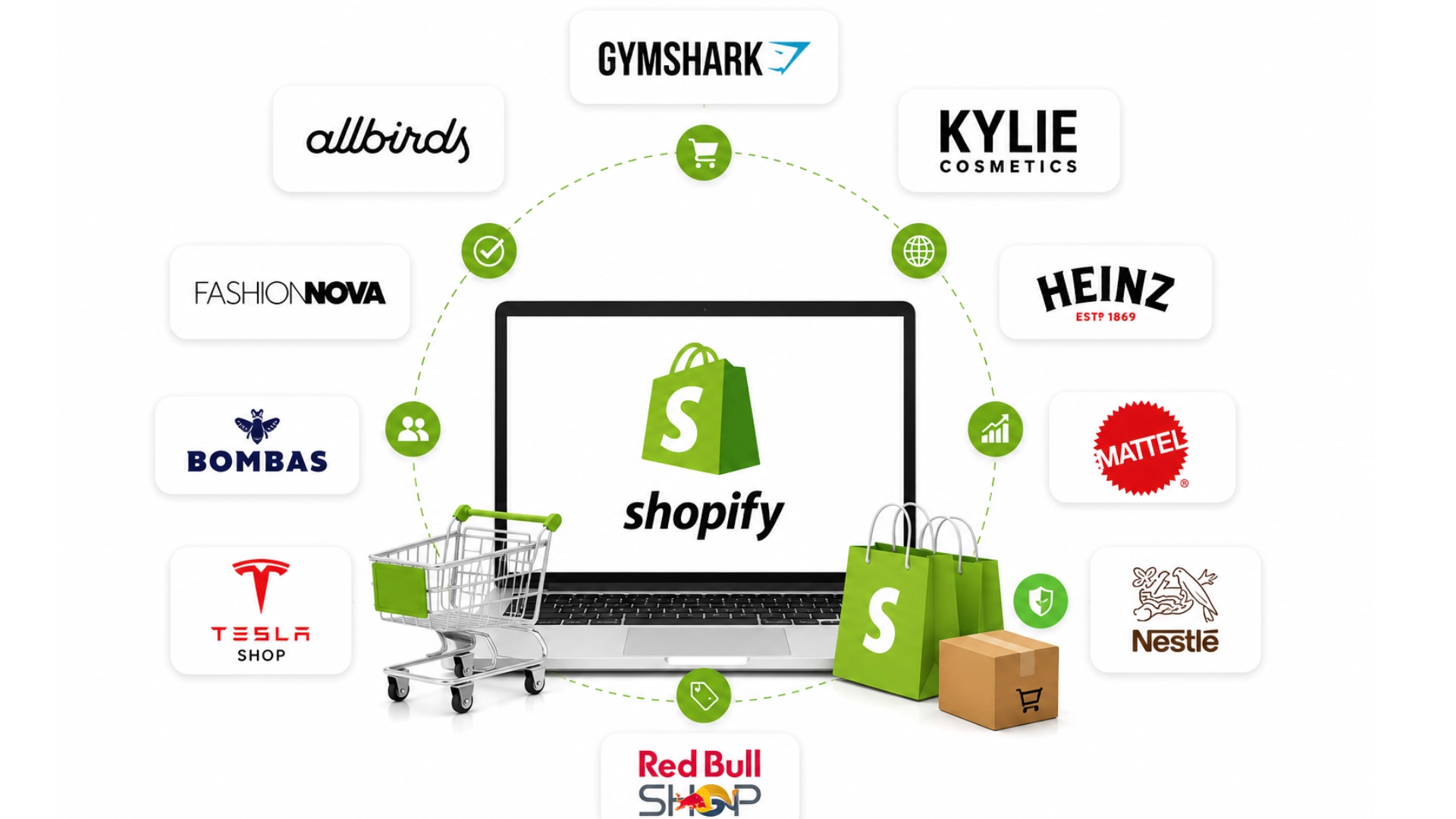
Quick answer: Shopify says it powers millions of businesses in more than 175 countries, and its own company description names brands such as Mattel, Gymshark, Heinz, FTD, Netflix, Kylie Cosmetics, SKIMS, and Supreme. Shopify has also published case studies on Gymshark, Mattel Creations, Heinz, and Allbirds. Large brands typically run on Shopify Plus, Shopify’s enterprise plan.

This guide lists well-known companies confirmed by Shopify’s own materials, explains how to check whether any website uses Shopify, and shows how B2B companies use Shopify user data to find prospects.

Key takeaways

  • Many “companies that use Shopify” lists online are unsourced. The brands below are confirmed by Shopify’s own case studies or company description.
  • Enterprise brands usually run on Shopify Plus, while most smaller merchants use standard Shopify plans.
  • You can check whether a site uses Shopify from public technical signals.
  • For B2B prospecting, a technographic list of Shopify users is more useful than a list of famous brands.

Which Well-Known Companies Use Shopify?

The brands below are named by Shopify itself, either in a published case study or in Shopify’s standard company description, which states that it is trusted by brands such as Mattel, Gymshark, Heinz, FTD, Netflix, Kylie Cosmetics, SKIMS, and Supreme.

BrandCategoryWhat Shopify has published
GymsharkFitness apparelA case study on replatforming from Adobe Commerce to Shopify Plus to scale internationally
Mattel (Mattel Creations)Toys and collectiblesA case study on using Shopify Plus and Shopify Collective
HeinzFood and consumer goodsA case study on launching a direct-to-consumer site quickly, and named in Shopify’s company description
AllbirdsFootwear and apparelA case study on omnichannel selling with Shopify POS
Kylie CosmeticsBeautyNamed in Shopify’s company description
SKIMSApparelNamed in Shopify’s company description
SupremeStreetwearNamed in Shopify’s company description
NetflixEntertainment merchandiseNamed in Shopify’s company description
FTDFlowers and giftsNamed in Shopify’s company description

Brands can change platforms, and a company may use Shopify for one store, such as merchandise, while running other channels elsewhere. Treat any brand list as a snapshot.

Shopify vs. Shopify Plus: Which Do Big Brands Use?

Shopify Plus is Shopify’s enterprise plan for high-volume merchants. It adds features for larger operations, such as more advanced checkout customization, automation, and multi-store management. Most of the well-known brands above use Shopify Plus, while the large majority of Shopify merchants are small and mid-sized businesses on standard plans.

For B2B marketers, the difference matters. Enterprise merchants buy agency services, integrations, and enterprise software, while smaller merchants buy apps, themes, and do-it-yourself tools.

How to Tell if a Website Uses Shopify

You can often identify a Shopify store from public signals:

  • Asset URLs: images and scripts loaded from cdn.shopify.com.
  • Store domains: a .myshopify.com address behind the custom domain.
  • Checkout: checkout pages hosted on Shopify’s checkout.
  • Technology lookup tools: browser extensions and technographic data services detect Shopify across many sites at once.

Checking sites one by one works for research. For prospecting at scale, a technographic list identifies Shopify users across thousands of companies. See our guide to technographic email lists.

Access CampaignLake's Technology Decision-Maker Database

Reach CIOs, CTOs, IT Directors and technology leaders with verified contact data.

Why B2B Companies Target Shopify Users

Shopify merchants are a clear audience for any business that sells to online stores:

  • Shopify app developers and SaaS tools: reviews, subscriptions, loyalty, and email marketing apps.
  • Agencies and developers: store design, migrations, and conversion optimization.
  • Logistics and fulfillment providers: warehousing, shipping, and returns.
  • Payments and financing companies: merchant financing and payment tools.
  • Marketplace and channel partners: selling on Amazon and other channels. See our Amazon sellers list guide.

What Is in a Shopify Users List?

Field groupTypical fieldsHow it helps
ContactOwner or ecommerce manager name, business email, phoneReach the person who runs the store
StoreStore domain, brand name, product categoryMatch offers to the store’s category
TechnologyShopify or Shopify Plus, installed apps where detectableTarget by plan and tech stack
CompanyEmployee range, estimated revenue band, locationFocus on stores that fit your price point
Record qualityLast verified dateStores open and close often, so recency matters

Segment by plan (Shopify or Shopify Plus), category, size, and location. For outreach strategy and providers, see our guides to Shopify store owner lists and Shopify users email lists.

Common Mistakes to Avoid

  • Trusting unsourced brand lists. Many lists repeat each other without confirming which platform a brand uses.
  • Targeting famous brands only. The real market is the many small and mid-sized merchants.
  • Ignoring the plan. Shopify Plus merchants and small stores need different offers.
  • Using stale data. Stores launch, migrate, and close often, so re-verify before campaigns.

How CampaignLake Builds Shopify Lists

CampaignLake is a B2B data provider that builds custom contact lists. Its Shopify users list, Shopify store owners email list, and Shopify DTC brand owners database can be filtered by category, location, and company size.

Request a sample, spot-check the stores, and compare it with other providers before you buy.

Related Guides

Ready to Reach More Decision-Makers?

Access verified business decision-maker data worldwide. Filter, download and build targeted outreach lists in minutes—without manual scraping or guesswork.

Frequently Asked Questions

What big companies use Shopify?

Shopify’s company description names brands such as Mattel, Gymshark, Heinz, FTD, Netflix, Kylie Cosmetics, SKIMS, and Supreme, and Shopify has published case studies on Gymshark, Mattel Creations, Heinz, and Allbirds.

Do big brands use Shopify or Shopify Plus?

Most large brands use Shopify Plus, Shopify’s enterprise plan for high-volume merchants. The large majority of Shopify merchants are small and mid-sized businesses on standard plans.

How can I tell if a website uses Shopify?

Look for assets loaded from cdn.shopify.com, a .myshopify.com store domain, or Shopify-hosted checkout pages. Technology lookup tools can also detect Shopify automatically.

How many businesses use Shopify?

Shopify says it powers millions of businesses in more than 175 countries. Exact merchant counts change over time, so check Shopify’s latest investor materials for current figures.

Why would a B2B company want a list of Shopify users?

Shopify users are a ready audience for app developers, agencies, logistics providers, payment companies, and other services that sell to online stores.

Are lists of companies using Shopify accurate?

Many online lists are unsourced and repeat each other. Brands also change platforms. Prefer sources confirmed by Shopify or verified by current technical checks.

In the United States, CAN-SPAM allows B2B commercial email without prior consent if you follow its rules, including honest headers, a postal address, and a working opt-out. This is general information, not legal advice.

What is the difference between a Shopify users list and a Shopify store owners list?

A Shopify users list identifies companies whose stores run on Shopify, while a store owners list focuses on the owners and managers of those stores. Many campaigns use both.

Picture of David Jax
David Jax

David Jax is a seasoned B2B marketing strategist specializing in targeted email lists and data-driven outreach solutions. With years of experience in lead generation and sales enablement, David helps businesses connect with the right audiences through precision-based marketing tactics. His ability to translate complex data into clear, actionable strategies has made him a trusted voice in the B2B space. Outside of his writing, David is passionate about exploring emerging trends in marketing technology and refining techniques that maximize campaign performance. He regularly contributes to leading industry blogs and enjoys sharing insights that help marketers turn data into growth.


LinkedIn Email