Follow us on :

As organizations continue to invest in artificial intelligence, cloud computing, and big data analytics, Databricks has become one of the leading platforms for managing and analyzing enterprise data. Thousands of companies using Databricks rely on its powerful Lakehouse architecture to streamline data engineering, build machine learning models, and gain real-time business insights. From Fortune 500 enterprises to fast-growing startups, businesses across industries are leveraging Databricks to accelerate digital transformation and make smarter, data-driven decisions.
Databricks is a cloud-based data analytics and AI platform that helps organizations collect, process, and analyze large volumes of data from a single unified environment. Built on Apache Spark, it combines data engineering, data science, machine learning, and business intelligence using its Lakehouse architecture.
Thousands of companies using Databricks rely on the platform to build scalable data pipelines, develop AI and machine learning models, and generate real-time business insights. It supports deployment on AWS, Microsoft Azure, and Google Cloud, making it a popular choice for enterprises across industries such as finance, healthcare, retail, manufacturing, and technology.
Businesses choose Databricks because it provides a unified platform for managing large-scale data, developing AI models, and performing advanced analytics without maintaining multiple disconnected systems.
Some of the biggest advantages include:
These capabilities make Databricks a preferred choice for organizations investing in digital transformation and AI initiatives.
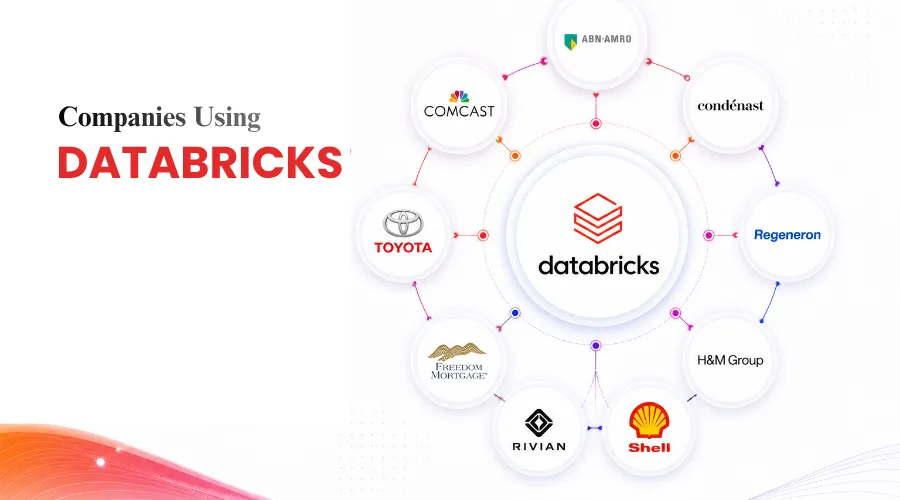
Here are some of the best-known companies using Databricks in 2026 based on publicly available customer references and industry reports.
| Company | Industry | Why They Use Databricks |
|---|---|---|
| Block | Fintech | Data engineering, analytics, and AI workflows |
| Comcast | Media & Telecommunications | Large-scale customer analytics and operational insights |
| Condé Nast | Media & Publishing | Audience insights, content analytics, and personalization |
| Rivian | Automotive | Manufacturing analytics, operations optimization, and data-driven innovation |
| Shell | Energy | Industrial data analysis, predictive maintenance, and forecasting |
| adidas | Retail & Consumer Goods | Customer personalization, inventory management, and supply chain insights |
| AT&T | Telecommunications | Network performance analytics, customer intelligence, and AI-driven operations |
| Bayer | Life Sciences | Research analytics, clinical data management, and operational efficiency |
| Mastercard | Financial Services | Fraud detection, risk analytics, and AI-powered decision-making |
| Unilever | Consumer Goods | Demand forecasting, supply chain optimization, and enterprise analytics |
Access CampaignLake's Technology Decision-Maker Database
Databricks users by industry span nearly every major vertical, but adoption is especially strong in data-intensive sectors.
Banks, insurance companies, payment providers, and fintech firms use Databricks to detect fraud, assess financial risks, segment customers, ensure regulatory compliance, and deliver real-time analytics for faster decision-making.
Healthcare providers, pharmaceutical companies, and life sciences organizations leverage Databricks to unify clinical, patient, and research data. The platform supports predictive analytics, drug discovery, personalized medicine, and compliance with healthcare regulations.
Retailers and consumer brands use Databricks to improve customer personalization, optimize inventory management, forecast demand, analyze purchasing behavior, and enhance supply chain efficiency.
Technology companies rely on Databricks to build scalable data platforms, develop AI and machine learning applications, process massive datasets, and accelerate product innovation through advanced analytics.
Manufacturers and automotive companies use Databricks for predictive maintenance, production optimization, quality control, IoT sensor data analysis, and end-to-end supply chain visibility.
Media, publishing, and streaming companies leverage Databricks to analyze audience behavior, deliver personalized content recommendations, optimize advertising campaigns, and improve subscription and engagement analytics.
Many organizations compare Databricks with other cloud data platforms before making a decision. Databricks stands out by combining data engineering, AI, machine learning, and analytics into a single Lakehouse platform, making it a preferred choice for enterprise data initiatives.
| Feature | Databricks Advantage |
|---|---|
| AI & Machine Learning | Built-in AI and ML capabilities with native MLflow support. |
| Analytics | Supports real-time analytics and large-scale data processing. |
| Lakehouse Architecture | Combines data lakes and data warehouses in one platform. |
| Apache Spark Support | Native Apache Spark integration for faster data processing. |
| Scalability | Scales easily to handle enterprise workloads and big data. |
| Pricing | Flexible pay-as-you-go pricing based on cloud usage. |
| Multi-Cloud Support | Available on AWS, Microsoft Azure, and Google Cloud. |
| Best For | Data engineering, AI, machine learning, and business analytics. |
Databricks is primarily used by large enterprises that manage massive volumes of data across multiple systems and cloud environments. These organizations require a scalable platform to unify data engineering, analytics, and AI while enabling real-time insights and collaboration across teams.
The most active companies using Databricks include businesses in finance, healthcare, retail, manufacturing, telecommunications, and technology. Within these organizations, Databricks is widely adopted by:
By providing a unified Lakehouse platform, Databricks helps these teams collaborate more effectively, reduce data silos, and turn complex data into actionable business insights.
Organizations use Databricks for a wide range of business applications beyond data storage. Its flexible architecture supports both operational analytics and advanced AI workloads.
Companies use Databricks to build, train, and deploy machine learning models that improve operations, automate processes, and generate predictive insights. Its AI and ML tools help data teams collaborate efficiently and accelerate model development.
Data engineering teams use Databricks to create reliable ETL and ELT pipelines that integrate data from multiple sources into a centralized environment. This ensures high-quality, consistent data for analytics, reporting, and machine learning projects.
Organizations leverage Databricks to analyze customer behavior, monitor business performance, and create interactive dashboards. Real-time insights help businesses optimize operations, improve customer experiences, and support informed decision-making.
Businesses use Databricks to forecast demand, predict equipment failures, optimize pricing, and improve operational efficiency. Analyzing historical and real-time data helps organizations reduce risks and make proactive business decisions.
Streaming analytics enables companies to process live transactions, IoT data, and customer interactions in real time. Databricks helps organizations respond quickly to changing conditions and deliver faster, data-driven services.
Finding organizations that use Databricks can be time-consuming when relying on manual research. CampaignLake simplifies the process by providing a verified Databricks Email List designed for targeted B2B marketing.
Our database helps businesses connect with decision-makers responsible for data engineering, cloud infrastructure, analytics, and AI initiatives.
With a verified Databricks Email List, you can:
Whether you offer cloud solutions, cybersecurity, AI services, consulting, software development, or enterprise technology products, a verified Databricks Email List helps you engage organizations actively investing in modern data platforms.
Ready to Reach More Decision-Makers?
Access verified business decision-maker data worldwide. Filter, download and build targeted outreach lists in minutes—without manual scraping or guesswork.
Databricks has become a leading data and AI platform, helping organizations transform large volumes of data into actionable business insights. From finance and healthcare to retail, manufacturing, and technology, companies using Databricks rely on its scalable Lakehouse architecture to support data engineering, machine learning, and real-time analytics.
As more businesses adopt AI-driven solutions, the demand for accurate Databricks Customers Lists and Databricks Email Lists continues to grow. If you’re looking to connect with organizations using Databricks, CampaignLake provides verified business contact data to help you reach the right decision-makers, generate qualified leads, and improve the success of your targeted B2B marketing campaigns.
Many leading organizations use Databricks for big data, analytics, and AI. Companies using Databricks include Adobe, Shell, AT&T, Toyota, HSBC, Comcast, Rivian, Regeneron, and many enterprises across finance, healthcare, retail, manufacturing, and technology.
Databricks is widely used across technology, banking, healthcare, retail, manufacturing, telecommunications, automotive, energy, insurance, and logistics. These industries rely on it for big data processing, AI, predictive analytics, and business intelligence.
Yes. Many Fortune 500 companies use Databricks to modernize their data infrastructure and support AI initiatives. Enterprises adopt the platform for cloud analytics, data engineering, machine learning, and business intelligence.
You can identify companies using Databricks through customer case studies, technology intelligence platforms, job postings, partner directories, engineering blogs, and verified B2B databases.
A Databricks Email List typically includes company names, business email addresses, contact names, job titles, industries, company size, locations, and other firmographic details for targeted B2B campaigns.
Targeting companies using Databricks helps businesses reach organizations investing in cloud data platforms, AI, and analytics. These companies often need solutions related to data management, cloud services, consulting, and enterprise software.
Databricks combines data lakes and data warehouses into a modern Lakehouse platform. It supports advanced analytics, AI, machine learning, and real-time processing, making it more flexible for enterprise workloads.
Businesses can obtain a verified Databricks Email List from trusted providers like CampaignLake to connect with decision-makers and improve targeted B2B marketing campaigns.

Singana Sivani is a recognized professional in B2B email marketing and data-driven lead generation, known for a strategic approach to helping businesses connect with the right audience. With strong expertise in high-performance email lists, growth marketing, and sales enablement, Singana transforms valuable data into impactful marketing campaigns that drive engagement, increase conversions, and maximize ROI. Focused on delivering measurable business growth, the work emphasizes simplifying prospecting, strengthening customer relationships, and helping organizations achieve better campaign performance through innovative data-driven strategies.