Follow us on :

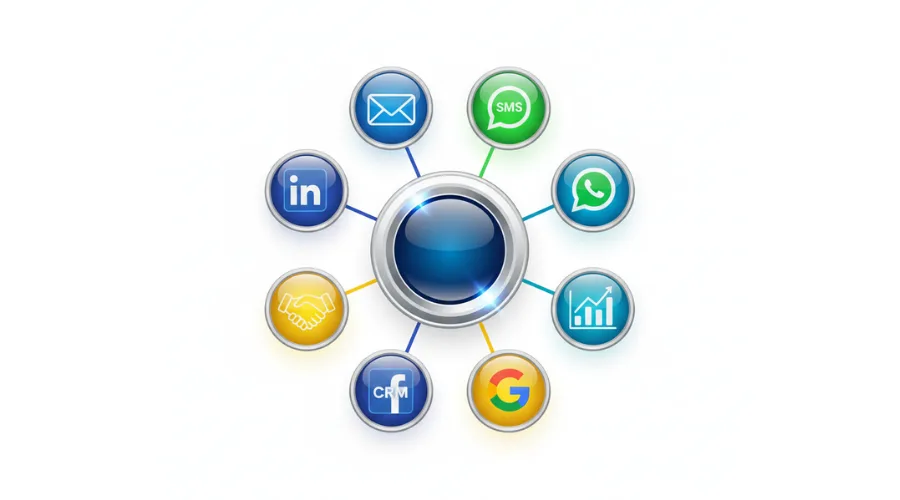
Quick answer: A multi-channel marketing platform is software that lets you plan, send, automate, and measure campaigns across several channels, such as email, SMS, social media, ads, and web, from one place. Platforms differ mainly in who they are built for (small businesses, ecommerce brands, B2B teams, or enterprises), which channels they support, and how deeply they integrate with your CRM and data.
This guide groups well-known multi-channel marketing platforms by type, explains what to look for, and covers the part many teams overlook: every platform is only as effective as the contact data you put into it.
Key takeaways
A multi-channel marketing platform, sometimes called a cross-channel marketing platform or multichannel marketing hub, is a system for running coordinated campaigns across more than one channel. Typical capabilities include email and SMS sending, audience segmentation, automated journeys, landing pages and forms, ad audience syncing, and reporting across channels.
Multi-channel means using several channels. Cross-channel or omnichannel usually means those channels share data, so a customer’s action on one channel changes what they see on another. Most modern platforms aim for the second.
| Type | Built for | Examples |
|---|---|---|
| All-in-one marketing and CRM suites | Teams that want marketing, CRM, and sales tools together | HubSpot Marketing Hub, Zoho Marketing Plus |
| Enterprise marketing clouds | Large organizations with complex journeys and data | Salesforce Marketing Cloud |
| B2B marketing automation | Lead management, scoring, and account-based marketing | Adobe Marketo Engage |
| SMB email and automation | Small and mid-sized businesses | ActiveCampaign, Mailchimp, Brevo |
| Ecommerce marketing | Online stores that need email and SMS tied to purchase data | Klaviyo, Omnisend |
| Email-focused platforms | Teams that mainly send designed email campaigns | Campaign Monitor |
Features, channels, and pricing change often, so confirm current capabilities with each vendor and use a trial where one is offered.
| Criterion | What to check |
|---|---|
| Channels | Which channels are native (email, SMS, social, ads, web, direct mail) and which need integrations |
| Automation | Visual journey builder, triggers, branching, and cross-channel steps |
| Segmentation | Filters on contact, company, and behavioral data |
| CRM and data integration | Native sync with your CRM, data warehouse, or ecommerce platform |
| Deliverability tools | Domain authentication, list hygiene, and sending reputation monitoring |
| Reporting | Cross-channel attribution and campaign-level results |
| Compliance | Consent management, unsubscribe handling, and data residency options |
| Cost and scale | Pricing by contacts, sends, or seats, and how cost grows with your list |
Access CampaignLake's Industry-Specific Email Database
A multi-channel platform delivers and automates campaigns, but it does not supply your audience. For B2B teams, results depend on whether the contacts inside the platform are accurate, current, and segmented by the right fields.
To understand the fields that matter, see our guides to B2B email lists and B2B contact data.
For more ideas, see our guides to email marketing and B2B email sequences.
CampaignLake is a B2B data provider, not a marketing platform. It supplies the contact data that multi-channel B2B campaigns run on: B2B email lists with firmographic fields, a business direct dial database for phone steps, and industry and role-based lists delivered in formats that import into common marketing platforms and CRMs.
Ready to Reach More Decision-Makers?
Access verified business decision-maker data worldwide. Filter, download and build targeted outreach lists in minutes—without manual scraping or guesswork.
A multi-channel marketing platform is software for planning, sending, automating, and measuring campaigns across several channels, such as email, SMS, social media, ads, and web, from one system.
Multi-channel marketing uses several channels. Cross-channel or omnichannel marketing connects those channels through shared data, so a contact’s action on one channel influences what they receive on another.
The right platform depends on your business model. All-in-one suites suit teams that want CRM and marketing together, enterprise clouds suit complex organizations, B2B automation tools suit lead management, and ecommerce platforms suit online stores. Trial your shortlist with a real campaign.
A multichannel marketing hub is a platform that centralizes audience data, campaign orchestration, and reporting across channels. The term is often used for enterprise-grade marketing platforms.
Most platforms manage and message your existing contacts but do not supply B2B prospect data. B2B teams typically source verified contact lists separately and import them into the platform.
Track outcomes across channels, such as replies, meetings booked, pipeline created, and revenue, and use the platform’s attribution reports to see which channels and steps contributed.
Common B2B channels are email, phone, LinkedIn, direct mail, paid social, and webinars or events, coordinated in a planned sequence for each segment.
Pricing varies widely. Many platforms charge by number of contacts or sends, while enterprise suites often use custom pricing. Estimate cost at your expected list size before choosing.

Tanoj Kumar writes the CampaignLake blog's guides on B2B data, industry and professional email lists, and B2B lead generation.