Follow us on :

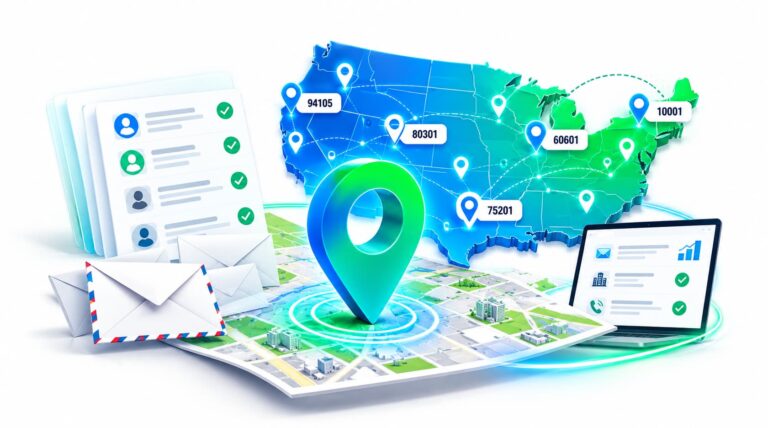
In 2026, buying a B2B database is no longer just about getting contacts — it’s about getting verified, compliant, and conversion-ready data that actually helps your sales team close deals.
For healthcare marketers, SaaS companies, and B2B sales teams, choosing the right B2B email list providers can directly impact deliverability, pipeline growth, and ROI. Poor-quality data leads to high bounce rates, spam complaints, wasted ad spend, and missed opportunities.
Before investing in any provider, use this checklist to evaluate whether the data partner truly delivers reliable and scalable prospecting data.
Modern outreach depends heavily on data quality. AI-powered spam filters, stricter privacy laws, and buyer fatigue mean inaccurate lists can damage your sender reputation quickly.
Whether you’re running:
your results depend on the quality and freshness of your contact database.
Top providers like CampaignLake, ZoomInfo, Apollo, UpLead, Lusha, and Bookyourdata all promote data accuracy — but smart buyers should independently evaluate every vendor before purchasing.
The first thing to audit is how the provider verifies email addresses.
A reliable provider should offer:
If a provider cannot explain their verification process clearly, that’s a major red flag.
High-quality verification improves:
Strong verification is essential for maintaining email list accuracy in modern outbound campaigns.
B2B data decays fast. Employees change companies, job titles evolve, and organizations restructure constantly.
Ask providers:
Top-performing B2B email list data providers refresh contact data continuously rather than relying on static datasets.
Fresh data directly impacts:
Compliance is now a non-negotiable factor when buying targeted email lists.
A trustworthy provider should support:
This is especially important for:
When evaluating Canada B2B data providers, ensure the vendor follows CASL guidelines carefully. Non-compliant outreach can lead to penalties and damaged brand trust.
Generic lists no longer perform well.
Modern providers should allow advanced segmentation based on:
For example:
The better the segmentation, the better your personalization strategy.
Ask vendors about historical deliverability benchmarks.
A strong provider should help you achieve:
Good B2B contact data quality should support scalable outreach without hurting domain reputation.
Not all databases are equally strong across industries.
Some providers specialize in:
For effective healthcare sales outreach, verify whether the provider includes:
Industry-specific depth improves targeting accuracy significantly.
In 2026, many leading platforms now include buyer intent signals.
This may include:
Intent data helps sales teams prioritize accounts that are actively researching solutions.
For SaaS and tech prospecting, intent-based targeting can dramatically increase conversion rates.
A modern provider should integrate easily with:
Without integrations:
Smooth CRM syncing helps maintain clean pipelines and improves operational efficiency.
Never purchase a large dataset without reviewing sample records.
A quality sample should help you evaluate:
Check whether the sample includes:
This is one of the simplest ways to test overall email list accuracy before committing.
Cheap databases often become expensive in the long run because of:
Instead of focusing only on price, compare:
The best B2B email list data providers focus on long-term campaign performance rather than selling massive unverified datasets.
Avoid providers that:
Low-quality providers often damage:
Reliable B2B data can help organizations:
For healthcare and SaaS organizations, quality data becomes a competitive advantage in crowded markets.
Among modern B2B email list providers, CampaignLake focuses on helping healthcare, SaaS, real estate, and investor-focused companies access targeted and verified business contacts for scalable outreach.
What Makes CampaignLake Stand Out
Businesses often evaluate providers based on:
CampaignLake supports outreach campaigns with:
Choosing the right B2B email list data providers in 2026 requires more than comparing prices or contact counts.
The best providers prioritize:
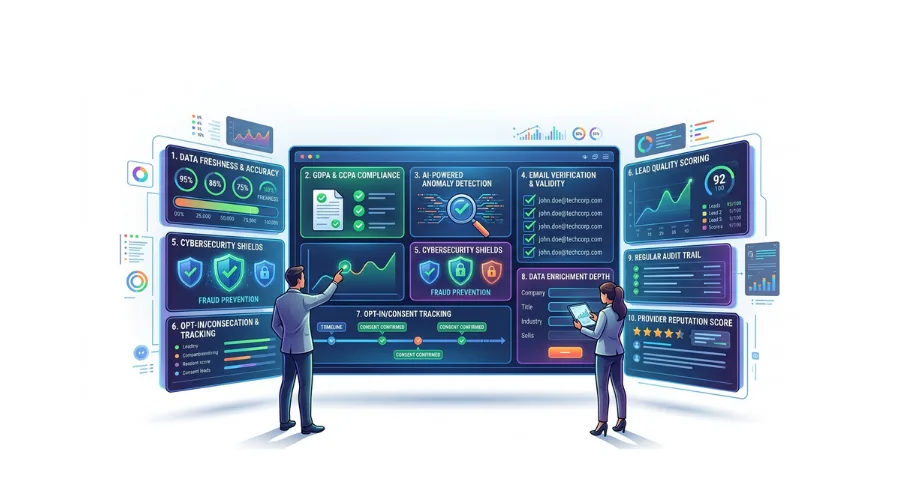
Before buying any database, use these 10 checks to ensure your outreach campaigns are built on accurate and scalable data.
For healthcare marketers and SaaS sales teams, investing in verified and compliant data is one of the most important decisions for sustainable outbound growth.
Ready to Reach More Decision-Makers?
Access verified business decision-maker data worldwide. Filter, download and build targeted outreach lists in minutes—without manual scraping or guesswork.
B2B email list data providers are companies that supply verified business contact information such as email addresses, phone numbers, job titles, company details, and industry data for sales and marketing outreach.
Choose a provider based on:
The best providers also offer sample data and regular database updates.
High email list accuracy improves:
Accurate data also reduces bounce rates and spam complaints during cold outreach campaigns.
Reliable B2B contact databases should be updated continuously or at least monthly because business data changes frequently due to job changes, company growth, and organizational restructuring.
B2B contact data can decay by 20%–30% annually due to employee turnover, company changes, and outdated information. This is why data freshness is critical for successful outreach.
Yes, targeted email lists can be legal when providers follow regulations such as:
Businesses should always verify compliance policies before purchasing data.
Healthcare organizations should evaluate:
Strong healthcare sales outreach depends on accurate and specialized data.
SaaS companies use B2B data providers to:
Verified data helps SaaS teams improve conversion rates and sales efficiency.

Tanoj Kumar writes the CampaignLake blog's guides on B2B data, industry and professional email lists, and B2B lead generation.