
Does CampaignLake offer custom B2B data pricing for SaaS marketing teams?
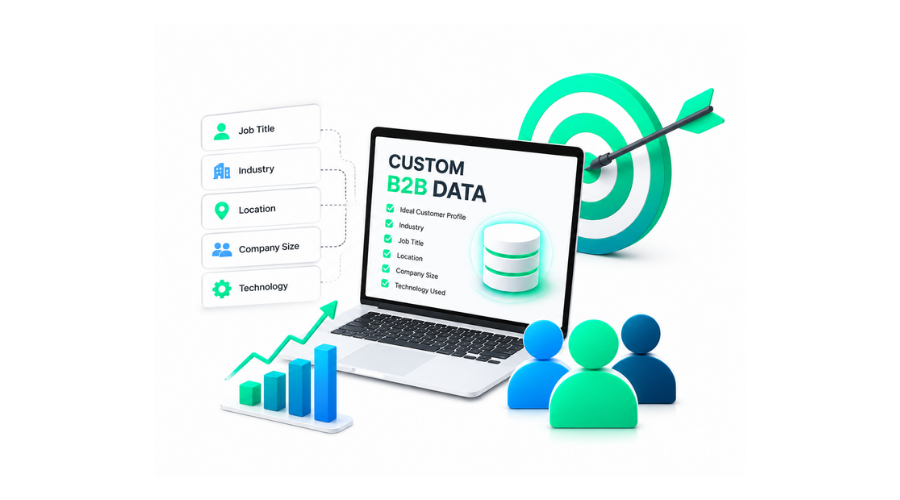
Yes. CampaignLake offers custom B2B data pricing for SaaS marketing teams by tailoring datasets to each company’s ideal customer profile (ICP), target industries, regions, technologies, job roles, and required contact volume. Instead of paying for large, generic databases, businesses receive a customized list of verified prospects that aligns with their marketing goals, helping improve lead quality, campaign efficiency, and return on investment.
Why SaaS Companies Need Custom B2B Data Instead of Generic Lists
Every SaaS company has a unique audience. A CRM platform targets sales leaders, while a cybersecurity provider focuses on IT executives. HR software vendors market to HR professionals, and fintech platforms often sell to finance teams.
Despite these differences, many businesses still purchase generic contact databases containing thousands—or even millions—of records that don’t match their ideal customers.
This creates several challenges:
- Higher marketing costs
- Lower email engagement
- Poor conversion rates
- Wasted sales outreach
- Reduced return on investment (ROI)
Custom B2B data solves this problem by allowing businesses to purchase only the contacts that match their specific marketing objectives.
Instead of filtering a large database after purchase, SaaS teams receive a ready-to-use prospect list built around their target audience.
Example: Why Customization Matters
| SaaS Business | Ideal Decision Makers |
|---|---|
| CRM Software | VP of Sales, Sales Director, Revenue Operations Manager |
| Cybersecurity Platform | Chief Information Security Officer (CISO), IT Director, Security Manager |
| HR Software | HR Director, CHRO, Talent Acquisition Manager |
| Marketing Automation Platform | Marketing Director, Demand Generation Manager, Digital Marketing Manager |
| Accounting Software | CFO, Finance Director, Controller |
| AI Productivity Platform | COO, Operations Director, Innovation Manager |
Each of these companies requires a different buyer persona. A one-size-fits-all database rarely delivers the precision needed for successful outreach campaigns.
What Is Custom B2B Data Pricing?
Custom B2B data pricing is a flexible pricing model where businesses pay based on the specific audience and data they require rather than purchasing a fixed-size database.
Pricing typically depends on factors such as:
- Number of contacts
- Geographic markets
- Industry selection
- Job titles and seniority
- Company size
- Revenue range
- Technology stack
- Required data fields
- Level of customization
This approach allows marketing teams to invest only in data that supports their campaigns instead of paying for unnecessary records.
Does CampaignLake Offer Custom B2B Data Pricing for SaaS Marketing Teams?
Yes.
CampaignLake provides customized B2B data solutions designed to help SaaS companies build highly targeted prospect databases.
Rather than offering rigid pricing plans, CampaignLake works with businesses to understand their:
- Ideal Customer Profile (ICP)
- Marketing objectives
- Sales strategy
- Geographic focus
- Industry preferences
- Required contact volume
- Technology targeting requirements
Based on these requirements, a tailored database is created to support email marketing, account-based marketing (ABM), outbound sales, demand generation, and lead nurturing campaigns.
This flexible approach enables businesses to purchase only the data they need, making campaigns more efficient and cost-effective.
How CampaignLake Builds Custom SaaS Prospect Databases
Instead of relying on broad audience lists, CampaignLake helps organizations define their ideal customer profile before creating a prospect database.
A typical customization process includes:
1. Define Your Ideal Customer Profile (ICP)
The first step is identifying the businesses most likely to benefit from your SaaS product.
Typical filters include:
- Industry
- Business model
- Company size
- Revenue
- Employee count
- Growth stage
2. Select Decision Makers
CampaignLake allows businesses to target specific roles within an organization.
Examples include:
- CEO
- Founder
- CIO
- CTO
- CMO
- VP of Sales
- Director of Marketing
- IT Manager
- Procurement Manager
- HR Director
- Finance Director
This ensures outreach reaches individuals who influence purchasing decisions.
3. Choose Geographic Markets
Marketing teams can target businesses by:
- Country
- State
- City
- ZIP Code
- Region
- Global markets
This is especially useful for companies running regional or international campaigns.
4. Apply Technology-Based Filters
Many SaaS companies sell products that integrate with existing software platforms.
CampaignLake supports technology-based segmentation, allowing marketers to identify organizations using specific business technologies where available.
Examples include businesses using:
- Microsoft 365
- Salesforce
- HubSpot
- AWS
- Google Workspace
- Shopify
- Oracle
- SAP
This helps SaaS companies identify prospects that are more likely to benefit from compatible solutions.
What Factors Influence Custom B2B Data Pricing?
Several variables determine the cost of a customized B2B database.
| Pricing Factor | Why It Matters |
|---|---|
| Contact Volume | Larger datasets generally offer better cost efficiency per record. |
| Geographic Coverage | Multi-country campaigns require broader data sourcing. |
| Industry Selection | Niche industries may require specialized research and verification. |
| Job Titles | Executive-level contacts often require additional validation. |
| Technology Filters | Technographic segmentation adds precision to targeting. |
| Data Fields | Additional fields such as direct phone numbers or LinkedIn profiles may affect pricing. |
| Verification Process | Human and AI verification improves data quality and usability. |
| Custom Research | Highly specific requests may require additional data enrichment. |
The goal is to provide a pricing model that aligns with campaign requirements rather than forcing customers into predefined packages.
Access CampaignLake's Industry-Specific Email Database
How Custom Segmentation Improves SaaS Marketing Campaigns
Segmentation is one of the biggest advantages of custom B2B data.
Rather than purchasing one large database, marketers can build highly targeted prospect lists that closely match their Ideal Customer Profile (ICP).
CampaignLake supports segmentation across multiple business attributes, making it easier to reach organizations most likely to convert.
Industry-Based Segmentation
Different industries have different buying behaviors, challenges, and purchasing cycles.
Examples include:
- Healthcare
- Financial Services
- Information Technology
- Manufacturing
- Retail
- Education
- Logistics
- Construction
- Telecommunications
- Real Estate
- Hospitality
- Government Contractors
Industry segmentation allows marketers to tailor messaging and improve campaign relevance.
Job Title Segmentation
Instead of contacting everyone in an organization, marketers can focus on decision-makers involved in purchasing software.
Popular job roles include:
- CEO
- Founder
- President
- CIO
- CTO
- CISO
- COO
- CFO
- VP of Sales
- VP of Marketing
- Director of IT
- Marketing Director
- Procurement Manager
- HR Director
- Operations Manager
This approach helps reduce unnecessary outreach while improving engagement with key stakeholders.
Company Size Segmentation
The needs of a startup differ significantly from those of an enterprise organization.
Businesses can segment prospects by:
- 1–10 Employees
- 11–50 Employees
- 51–200 Employees
- 201–500 Employees
- 501–1,000 Employees
- 1,000+ Employees
- Enterprise Organizations
This is particularly useful for SaaS companies offering pricing plans tailored to different business sizes.
Revenue-Based Segmentation
Annual revenue often reflects an organization’s purchasing capacity.
Examples include:
- Under $1 Million
- $1M–$10M
- $10M–$50M
- $50M–$100M
- $100M–$500M
- $500M+
Revenue segmentation helps prioritize accounts that align with your product’s pricing and target market.
Geographic Segmentation
CampaignLake enables businesses to target organizations across specific locations.
Available options include:
- Country
- State
- Province
- City
- ZIP Code
- Metropolitan Area
- Regional Markets
This flexibility is especially valuable for SaaS companies expanding into new markets or running localized campaigns.
Technographic Segmentation
Many SaaS products integrate with existing business technologies.
Technographic segmentation helps identify organizations using platforms that complement your solution.
Examples include businesses using:
- Microsoft 365
- Google Workspace
- Salesforce
- HubSpot
- AWS
- Azure
- Oracle
- SAP
- Shopify
- WooCommerce
- Slack
- Zoom
For example, a SaaS company offering Microsoft Teams integrations can focus on organizations already using Microsoft 365, making outreach more relevant.
Why Technographic Data Matters for SaaS Companies
Technographic data provides insight into the software and technology solutions businesses already use.
Instead of marketing to every company within an industry, SaaS vendors can prioritize prospects with compatible technology environments.
Example
Suppose your company develops a cybersecurity solution that integrates with Microsoft Azure.
Rather than targeting every IT company, you can focus on businesses already using Azure, increasing the likelihood that your solution fits their existing infrastructure.
This targeted approach can lead to:
- Better-qualified leads
- Higher response rates
- More productive sales conversations
- Improved marketing efficiency
How to Choose the Right B2B Data Provider
Selecting the right data provider is just as important as choosing the right audience.
Before purchasing a B2B database, consider the following factors:
Data Accuracy
Ask how frequently the provider verifies and updates contact information. Reliable data helps reduce email bounces and improves outreach quality.
Customization Capabilities
Look for providers that can tailor databases based on industry, company size, job roles, geography, and technology usage instead of offering only standard lists.
Data Coverage
Ensure the provider offers coverage in the regions and industries relevant to your business goals.
Compliance
Verify that the provider follows applicable data privacy regulations and responsible data management practices in the markets you serve.
Customer Support
A knowledgeable support team can help refine targeting criteria and recommend the best segmentation options for your campaigns.
Why SaaS Companies Choose CampaignLake
CampaignLake supports SaaS marketing teams by providing flexible, campaign-specific B2B databases instead of one-size-fits-all contact lists.
Key advantages include:
- Custom pricing based on your campaign requirements
- Industry, geography, job title, and technographic segmentation
- Human + AI verified business contacts
- Flexible contact volumes for startups and enterprises
- CRM-ready delivery in Excel or CSV format
- Faster campaign launch with targeted prospect lists
Whether you’re targeting CTOs at enterprise software companies or marketing managers at growing SaaS businesses, CampaignLake helps you build a prospect database aligned with your Ideal Customer Profile.
Frequently Asked Questions
The cost of a custom B2B database depends on factors such as the number of contacts, target industries, geographic coverage, job titles, company size, and additional data fields. Most providers offer customized pricing instead of fixed packages so businesses only pay for the data that matches their campaign requirements.
Custom B2B data pricing is typically influenced by contact volume, industry, location, company size, decision-maker roles, technographic filters, and the level of data enrichment required. More targeted datasets generally require additional research and verification, which can affect pricing.
Custom B2B data enables SaaS companies to target businesses that closely match their Ideal Customer Profile (ICP), resulting in more relevant outreach, higher engagement, better lead quality, and improved ROI. Generic contact lists often include irrelevant prospects that reduce campaign effectiveness.
Yes. Many B2B data providers allow businesses to customize prospect lists using filters such as industry, job title, company size, annual revenue, location, and technologies used. This helps create highly targeted databases for Account-Based Marketing (ABM), outbound sales, and demand generation campaigns.
A custom B2B database may include business email addresses, direct phone numbers, job titles, departments, company names, websites, industry classifications, employee count, annual revenue, location details, and firmographic or technographic information depending on the provider and requested dataset.
Yes. Many B2B data providers offer technographic segmentation that allows you to identify companies using technologies such as Microsoft 365, Salesforce, HubSpot, AWS, Azure, Google Workspace, and Shopify. This helps SaaS companies prioritize prospects that are more likely to benefit from compatible products or integrations.
Yes. Custom B2B data is particularly valuable for ABM because it enables marketing and sales teams to target named accounts and specific decision-makers with personalized outreach. This focused approach can improve engagement and campaign efficiency compared with broad-based marketing.
Because business contact information changes frequently as employees change roles or companies, organizations should use regularly refreshed and verified data. Keeping contact information current helps reduce email bounce rates and improves campaign performance.
When evaluating a B2B data provider, consider data accuracy, customization options, compliance practices, industry coverage, verification methods, CRM compatibility, customer support, and the availability of sample data before making a purchase decision.
Yes. CampaignLake offers free sample data so businesses can review data quality, field coverage, and targeting before placing an order. This helps buyers verify that the dataset aligns with their campaign requirements before making a purchase.
Conclusion: Is Custom B2B Data Pricing Worth It for SaaS Marketing Teams?
For SaaS businesses, successful lead generation isn’t about reaching the largest audience—it’s about reaching the right audience. Generic contact lists may seem cost-effective initially, but they often include irrelevant prospects, resulting in lower engagement, higher acquisition costs, and inefficient marketing campaigns.
Custom B2B data pricing offers a smarter alternative by allowing you to purchase a database tailored to your Ideal Customer Profile (ICP). With the ability to filter prospects by industry, job title, company size, location, revenue, and technology stack, your marketing and sales teams can focus their efforts on qualified decision-makers who are more likely to convert.
CampaignLake supports this approach by providing flexible, customized B2B data solutions for SaaS companies of all sizes. Whether you’re launching a new product, expanding into new markets, running account-based marketing (ABM) campaigns, or scaling outbound sales, a tailored prospect database helps improve campaign precision, optimize marketing spend, and generate higher-quality leads.
If you’re looking to build a targeted B2B database instead of paying for unnecessary contacts, CampaignLake’s custom B2B data pricing model gives you the flexibility to invest only in the audience that matters most to your business.
Ready to Reach More Decision-Makers?
Access verified business decision-maker data worldwide. Filter, download and build targeted outreach lists in minutes—without manual scraping or guesswork.





Ben Williams is a leading voice in B2B email marketing and data-driven lead generation. Known for his strategic mindset and deep understanding of high-performance email lists, Ben helps businesses cut through the noise and connect with their ideal audience. With a background rooted in growth marketing and sales enablement, he transforms raw data into revenue-generating campaigns that consistently deliver results. His work empowers organizations to streamline prospecting, boost conversions, and maximize ROI. Beyond the inbox, Ben stays at the forefront of emerging trends in data intelligence and B2B engagement, always seeking innovative ways to elevate campaign performance.