Follow us on :

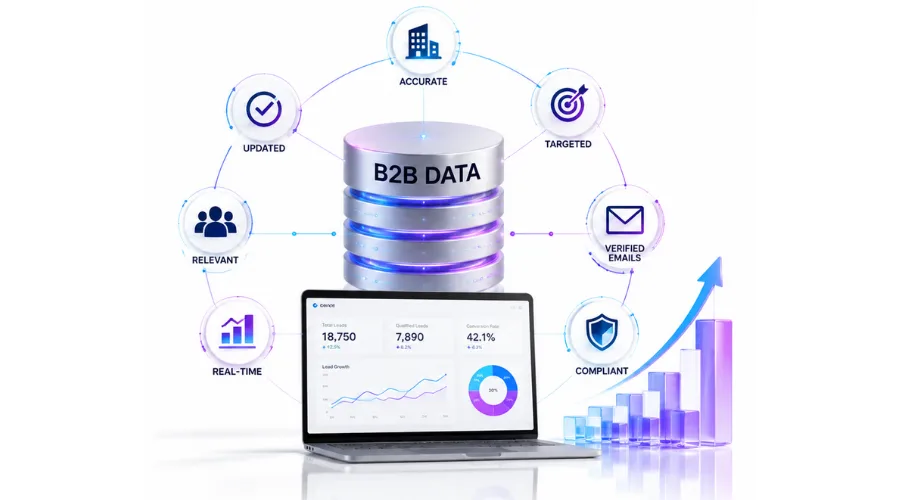
In today’s competitive SaaS market, having a great product is no longer enough. Most software companies rely on outbound sales and marketing to consistently generate qualified pipeline, accelerate customer acquisition, and scale revenue. Whether it’s cold email campaigns, LinkedIn outreach, account-based marketing (ABM), or sales development representatives (SDRs), every outbound strategy begins with one essential asset: high-quality B2B contact data.
However, many SaaS businesses make a costly mistake by prioritizing the size of a database over its accuracy and relevance. Purchasing millions of generic business contacts may seem like a shortcut to faster growth, but in reality, large, untargeted databases often lead to poor engagement, higher email bounce rates, wasted sales efforts, and lower conversion rates. More contacts don’t automatically translate into more customers—reaching the right decision-makers with verified, industry-specific data does.
Generic B2B databases are designed to serve a broad audience across multiple industries, making them useful for basic market research but less effective for precision outreach. SaaS companies typically have clearly defined Ideal Customer Profiles (ICPs) based on company size, industry, technology stack, job role, funding stage, or business needs. When contact data lacks this level of segmentation and verification, sales teams spend more time filtering irrelevant prospects than building meaningful conversations with qualified buyers.
This article explores seven key reasons generic B2B data slows SaaS outreach, how it impacts deliverability, personalization, and sales efficiency, and why verified, industry-specific contact data has become essential for modern SaaS lead generation. If you’re looking to improve pipeline quality, maximize outbound ROI, and help your sales team connect with the right prospects faster, understanding the difference between generic and targeted B2B data is the first step.
Generic B2B data is a broad database of business contacts collected from multiple industries, company sizes, and job roles. It gives businesses access to a large number of contacts, but many may not match their Ideal Customer Profile (ICP).
Unlike industry-specific databases, generic B2B data focuses on quantity rather than relevance, making it harder for SaaS companies to reach the right decision-makers.
Key Characteristics of Generic B2B Data
1. Large Contact Databases
Generic B2B databases often contain millions of business contacts across different industries and regions. While this provides wide coverage, many contacts may not be relevant to your SaaS product.
2. Mixed Industries
These databases include companies from healthcare, finance, manufacturing, retail, education, technology, real estate, and many other sectors. This makes it difficult to build highly targeted outreach campaigns.
3. Limited Segmentation
Most generic databases offer only basic filters such as industry, job title, or location. They often lack advanced segmentation based on company size, technology stack, buying intent, or business needs.
4. Outdated Contact Information
Business information changes frequently. Employees change jobs, companies grow or close, and email addresses become inactive. If the database isn’t updated regularly, your campaigns may experience higher bounce rates and lower deliverability.
Industry-specific B2B data is a targeted database of business contacts from a particular industry or market. Instead of including companies from every sector, it focuses only on businesses that match your Ideal Customer Profile (ICP). This helps SaaS companies reach the right decision-makers with more relevant and personalized outreach.
Because the data is organized by industry, job role, company size, and other business attributes, sales and marketing teams can launch campaigns with higher accuracy and better conversion potential.
Examples of Industry-Specific B2B Data
Healthcare: Includes hospitals, clinics, physicians, healthcare executives, medical device companies, pharmaceutical firms, and healthcare IT professionals.
Manufacturing: Includes manufacturers, plant managers, operations leaders, procurement teams, supply chain professionals, and industrial businesses.
Finance: Includes banks, credit unions, insurance companies, investment firms, financial advisors, fintech companies, and accounting firms.
Technology: Includes SaaS companies, software developers, IT managers, CIOs, cybersecurity firms, cloud service providers, and technology startups.
Retail: Includes retail chains, eCommerce businesses, store owners, merchandising teams, franchise operators, and retail executives.
Legal: Includes law firms, attorneys, legal consultants, corporate legal departments, and legal technology companies.
Education: Includes schools, colleges, universities, training institutes, education technology (EdTech) companies, and academic administrators.
Generic B2B databases may contain millions of contacts, but more data doesn’t always mean better results. SaaS companies need accurate, relevant, and well-segmented contact information to connect with the right decision-makers. When the data is too broad or outdated, outreach campaigns become less effective, leading to wasted time, lower engagement, and reduced ROI.
Here are seven reasons why generic B2B data can slow your SaaS outreach.
Every successful SaaS company has an Ideal Customer Profile (ICP) that defines the type of companies and decision-makers most likely to buy its solution. Generic B2B databases often include businesses from multiple industries, company sizes, and job roles, making it difficult to identify the right prospects.
As a result, sales teams spend valuable time filtering irrelevant contacts instead of focusing on qualified opportunities. Better ICP matching leads to higher response rates and more productive sales conversations.
Email deliverability depends on sending messages to valid and relevant contacts. Generic databases often contain outdated or unverified email addresses, increasing the chances of emails being ignored, marked as spam, or rejected by email providers.
Poor deliverability reduces the effectiveness of outbound campaigns and makes it harder for future emails to reach inboxes. Using verified contact data helps protect your sender reputation and improve campaign performance.
Business contact information changes constantly. Employees switch companies, job titles change, and organizations update their email domains. If your database isn’t refreshed regularly, your campaigns are more likely to generate hard and soft bounces.
High bounce rates not only waste marketing resources but can also damage your email domain reputation, making future outreach less successful.
Modern B2B buyers expect personalized communication. Generic databases often provide only basic information such as a company name, email address, and job title, leaving little context for meaningful outreach.
Without details like industry, company size, technology stack, or business challenges, it’s difficult to create relevant messaging. Personalized campaigns typically generate better open rates, replies, and conversions than generic sales emails.
Reaching companies that don’t fit your Ideal Customer Profile often leads to longer sales cycles. Sales representatives may spend weeks engaging prospects who lack the budget, authority, or need for the product.
Industry-specific data helps teams prioritize qualified buyers, making it easier to move prospects through the sales pipeline and close deals faster.
Sales Development Representatives (SDRs) should spend their time building relationships and booking meetings—not cleaning spreadsheets. With generic databases, SDRs often need to verify contact information, remove duplicates, and research companies before launching outreach.
Using verified and segmented B2B data reduces manual work, allowing sales teams to focus on high-value activities that generate pipeline.
Every outbound campaign requires an investment of time, budget, and resources. When your database contains irrelevant or inaccurate contacts, response rates decline while customer acquisition costs increase.
Targeted, industry-specific data helps improve lead quality, increase engagement, and maximize the return on your sales and marketing efforts. Better data leads to better conversations, more qualified opportunities, and stronger business growth.
Choosing the right B2B database can significantly impact the success of your SaaS outreach campaigns. While generic databases provide broad access to business contacts, verified industry data focuses on accuracy, relevance, and your Ideal Customer Profile (ICP). Here’s how they compare:
| Generic Database | Verified Industry Data |
|---|---|
| Broad targeting across multiple industries | Precise ICP targeting for your ideal customers |
| Lower data accuracy due to outdated contacts | Higher accuracy with regularly verified contacts |
| Includes businesses from mixed industries | Focuses on a specific industry or niche |
| Lower reply and engagement rates | Better engagement through relevant outreach |
| Requires more manual cleaning and validation | CRM-ready data that saves time |
| Higher email bounce rates | Lower bounce rates with verified email addresses |
| Limited personalization opportunities | Rich business insights for personalized campaigns |
| More time spent qualifying leads | Faster prospecting with pre-qualified contacts |
| Lower conversion potential | Higher lead quality and conversion rates |
| Reduced return on marketing spend | Better ROI from targeted campaigns |
While verified, industry-specific data is often the best choice for SaaS lead generation, generic B2B data isn’t always the wrong option. In some situations, broad business databases can be valuable—especially when your goal is research, awareness, or exploring new markets rather than generating immediate sales.
Here are a few scenarios where generic B2B data can be useful.
If your objective is to introduce your brand to a wide audience, generic B2B data can help you reach businesses across multiple industries. These campaigns focus on increasing visibility rather than targeting a specific buyer group.
When evaluating new markets or estimating your Total Addressable Market (TAM), a broad database provides insights into the number of companies, industries, and regions that could become potential customers. This information is useful for business planning and market analysis.
Generic B2B data can help organizations understand market trends, identify industry segments, and estimate business opportunities before narrowing their focus. It provides a starting point for researching new verticals or geographic markets.
Companies launching a new product or entering a new industry may use generic data to explore different customer segments. After identifying which markets show the most interest, they can transition to more targeted, industry-specific databases.
Generic databases work well for broad awareness activities such as newsletters, educational content, webinars, and industry reports. Once prospects engage with your content, you can qualify and segment them for more personalized follow-up campaigns.
Access CampaignLake's Industry-Specific Email Database
Not all B2B data providers offer the same level of quality. Choosing the right provider can improve lead quality, increase email deliverability, and help your sales team connect with the right prospects. Before investing in a database, use the checklist below to evaluate whether the provider meets your business needs.
SaaS Data Provider Checklist
Look for providers that regularly verify email addresses, phone numbers, and company information. Verified data helps reduce bounce rates, improves email deliverability, and ensures your sales team reaches real decision-makers.
Choose a provider that follows data privacy regulations such as GDPR, CCPA, and CAN-SPAM. Compliance helps protect your business and ensures your outreach follows applicable legal and ethical standards.
Business information changes frequently as professionals switch jobs and companies grow or reorganize. Select a provider that refreshes and verifies its database regularly to keep your contact lists accurate and up to date.
Your provider should allow you to filter contacts by industry, company size, location, job title, revenue, and other business attributes. Industry-specific segmentation helps you build highly targeted prospect lists that match your Ideal Customer Profile (ICP).
For SaaS companies, technographic data is a valuable feature. Technology filters let you target businesses based on the software, cloud platforms, CRM systems, or business applications they already use, making your outreach more relevant.
Some providers offer buyer intent data that identifies companies actively researching products or services similar to yours. Intent signals help sales teams prioritize high-potential prospects who may be closer to making a purchase decision.
Choose a provider whose data integrates easily with your CRM and marketing automation platforms. CRM-ready data reduces manual work, improves workflow efficiency, and allows your sales team to start outreach faster.
Successful SaaS outreach depends on reaching the right prospects with accurate and relevant contact data. CampaignLake provides data solutions designed to help sales and marketing teams build targeted prospect lists, improve outreach efficiency, and connect with decision-makers that match their Ideal Customer Profile (ICP).
CampaignLake uses a combination of human review and AI-powered verification to help maintain the accuracy of business contact data. This process helps reduce invalid contacts, improve email deliverability, and support more reliable outbound campaigns.
Instead of relying on broad business databases, CampaignLake allows businesses to build targeted lists based on industries such as healthcare, finance, manufacturing, technology, retail, education, legal, and many others. This helps SaaS companies focus on prospects that are more relevant to their products and services.
CampaignLake offers technographic filtering to help businesses identify companies using specific technologies, software platforms, CRMs, cloud services, or business applications. This enables more relevant messaging and supports account-based marketing (ABM) strategies.
Whether you’re targeting companies in North America, Europe, Asia-Pacific, or other international markets, CampaignLake provides access to business contacts across multiple countries and industries, making it easier to support global sales and marketing initiatives.
CampaignLake provides contact data in CRM-ready formats, making it easier to import records into popular CRM and marketing automation platforms. This reduces manual data preparation and helps sales teams launch campaigns more quickly.
Every SaaS company has unique targeting requirements. CampaignLake enables businesses to create custom prospect lists using filters such as industry, company size, location, job title, department, revenue, employee count, and technology usage. This helps sales and marketing teams build audiences that closely align with their Ideal Customer Profile.
Generic B2B data is a broad database of business contacts from multiple industries, company sizes, and job roles. It offers wide coverage but may lack the accuracy and segmentation needed for highly targeted SaaS outreach.
Industry-specific B2B data is a targeted database focused on a particular industry, such as healthcare, finance, manufacturing, or technology. It helps businesses reach decision-makers who closely match their Ideal Customer Profile (ICP).
Industry-specific data enables SaaS companies to target relevant prospects, personalize outreach, improve email engagement, and generate higher-quality leads. It also reduces time spent qualifying irrelevant contacts.
Outdated or inaccurate contacts in generic databases can increase bounce rates, spam complaints, and inactive recipients. These factors can reduce email deliverability and impact future outbound campaigns.
Choose a provider that offers verified contact data, regular updates, industry segmentation, technographic filters, buyer intent signals, compliance with privacy regulations, and CRM-ready exports.
Technographic filters allow businesses to identify companies based on the technologies they use, such as CRM platforms, cloud services, marketing automation tools, ERP systems, or cybersecurity software. This helps create more targeted outreach campaigns.
Business data changes frequently as professionals switch jobs and companies evolve. A reliable data provider should verify and refresh its database regularly to maintain data quality and reduce outdated contacts.
Yes. Generic B2B data is useful for brand awareness campaigns, Total Addressable Market (TAM) research, market sizing, and exploring new industries. However, for outbound sales and lead generation, industry-specific data is generally more effective.
Verified B2B data helps sales teams reach accurate decision-maker contacts, reduce bounce rates, improve personalization, increase response rates, and generate more qualified sales opportunities.
Industry-specific databases can include healthcare, manufacturing, finance, technology, retail, legal, education, real estate, logistics, hospitality, telecommunications, and many other business sectors.
CampaignLake provides human and AI-verified business data, industry-specific segmentation, technographic filters, global business coverage, CRM-ready exports, and custom audience-building options to help SaaS companies create more targeted outreach campaigns.
For most SaaS companies, yes. Industry-specific B2B data provides better targeting, higher data accuracy, improved personalization, lower bounce rates, and stronger lead generation performance compared to generic databases.
An Ideal Customer Profile (ICP) is a description of the type of company that is most likely to benefit from your product or service. It typically includes factors such as industry, company size, revenue, location, technology stack, and decision-maker roles.
Improve outbound sales by using verified contact data, targeting companies that match your ICP, personalizing outreach, leveraging technographic insights, maintaining CRM data hygiene, and regularly updating your prospect database.
Generic B2B data contains contacts from multiple industries with broad targeting, while verified industry data focuses on specific sectors and includes validated, segmented contacts. This makes industry-specific data more suitable for personalized outreach, account-based marketing (ABM), and SaaS lead generation.
Ready to Reach More Decision-Makers?
Access verified business decision-maker data worldwide. Filter, download and build targeted outreach lists in minutes—without manual scraping or guesswork.

Tanoj Kumar writes the CampaignLake blog's guides on B2B data, industry and professional email lists, and B2B lead generation.